
Diwali Wishes for Business Partners: 12 Warm Messages
Original greeting collection, updated 30 October 2026.
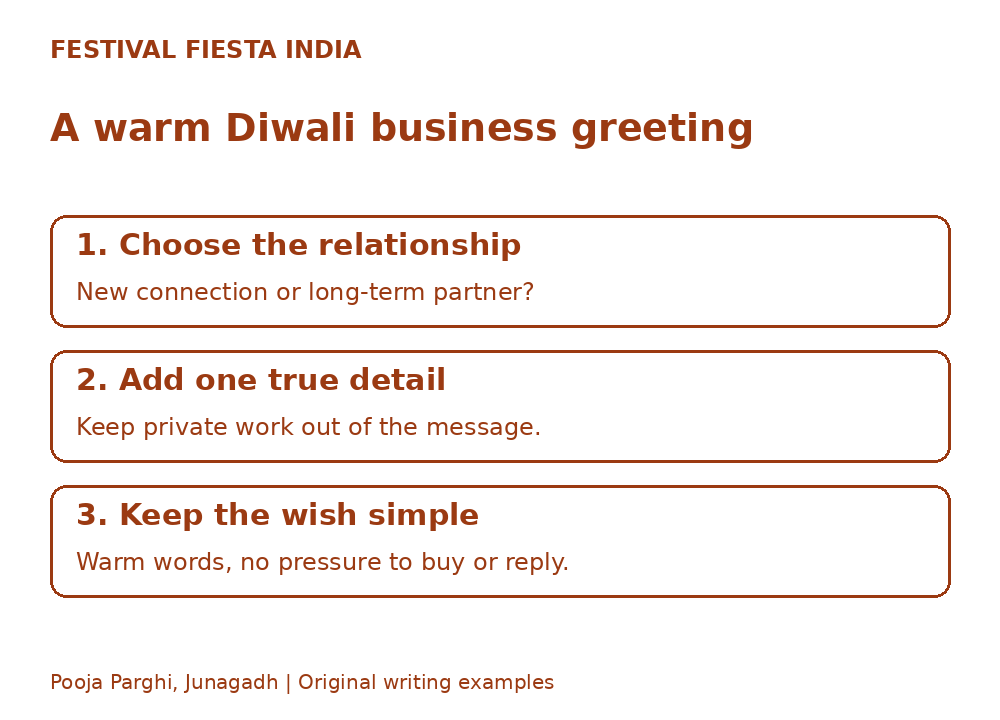
Direct answer: a warm wish, one true detail, no sales pitch
A good Diwali greeting for a business partner can be short. Choose a message that matches the actual relationship, add one truthful sentence if it helps, and finish without asking for a purchase or a quick reply. A festive message should not sound like an invoice reminder wearing a greeting-card cover.
The twelve messages below are original writing examples. They are not traditional quotations and have not been sent to anyone. You can adapt them for a card, email or short message, after checking that the recipient and the description of your shared work are correct.
Choose a real relationship
A business-partner greeting can be warm without sounding like a sales pitch. Decide whether you are writing to a long-term collaborator, a new supplier or a whole team. Mention shared work only when it is true. Do not invent success figures or turn a festival greeting into pressure to buy.
Short messages for a card
- Wishing you a peaceful Diwali and a rewarding year ahead. Thank you for working with us.
- May this Diwali bring light, good health and time with the people who matter to you.
- Warm Diwali wishes to you and your team. We value our partnership.
- Wishing you a bright festive season and a steady start to the year ahead.
Messages for a long-term partner
- Thank you for the care you bring to our work together. Wishing you and your family a joyful Diwali.
- Our partnership has grown through honest conversations and shared effort. Warm wishes for Diwali.
- Wishing your team a restful celebration and many good days ahead. Thank you for your continued cooperation.
- This Diwali, we are grateful for the trust behind our work together. Wishing you peace and happiness.
Messages for a new connection
- It has been a pleasure getting to know your team. Wishing you a happy Diwali and a bright year ahead.
- Warm Diwali greetings. We look forward to building a thoughtful working relationship.
- Wishing your business and everyone behind it a peaceful festive season.
- Thank you for the opportunity to connect. May your Diwali be filled with warmth and good company.
1. Check who will read it
Decide whether you are writing to one person, a department or an entire company. A personal family wish may suit a familiar contact, while a team greeting fits a shared inbox better. Check the spelling of the recipient's name and the company name before copying a message into the final channel.
Check: The greeting names the right person or team. It does not expose somebody else's address, private contact detail or unrelated conversation.
2. Choose words the relationship has earned
A long partnership can support a line about continued trust. A first conversation usually cannot. For a new connection, use the messages that thank them for connecting or look forward to future work. Avoid describing years of cooperation, a successful project or a shared achievement unless those things actually happened.
Check: Every relationship claim is true. If you would need to explain or defend the sentence, simplify it.
3. Add one specific detail, or leave it simple
A genuine detail can be as small as appreciation for careful coordination or a helpful planning conversation. It does not need a sales figure, a client name or confidential project information. If you cannot think of a safe true detail, the short original wish is enough. Personalization is useful only when it sounds natural.
Check: Your extra sentence adds warmth without revealing private work or inventing success.
4. Read it once without the template
Read the completed message as the recipient will see it. Remove leftover placeholders, duplicate names and promotional links that change the purpose. Keep any business deadline in a separate clearly labeled message rather than attaching pressure to a festival greeting.
Check: The final message stands on its own, does not demand a reply and contains no unfinished editing notes.
How to personalize without overdoing it
Replace a generic thank-you with one truthful detail: a carefully handled delivery, a useful planning conversation or patient collaboration. Keep confidential project details out of group messages. A named greeting usually needs only one extra sentence, not a full company history.
A before-and-after example
Generic: "Happy Diwali. Buy our new package now." More suitable: "Warm Diwali wishes to your team. Thank you for the careful coordination on our recent work." The second message keeps the greeting separate from promotion. Use it only if that coordination actually happened.
What if you do not know whether they celebrate?
Use a gentle festive-season wish and do not assume religious practice. Avoid demanding a reply during time off. If sending to a group, check names and the audience before sharing. These are original greeting ideas, not traditional quotations or messages sent on anyone's behalf.
Troubleshooting a greeting that feels wrong
It sounds too formal: use the short card version and one plain thank-you. Removing ceremonial language often helps more than adding another paragraph.
It sounds like an advertisement: remove the offer, discount code and purchase request. Send commercial information separately if that is genuinely needed.
You have not worked together yet: do not thank them for a successful partnership. Thank them for connecting and wish their team well.
There is an unresolved work problem: keep the greeting respectful without claiming everything has gone perfectly. Deal with the actual issue through its normal business conversation.
You are sending one message to many contacts: check the audience and sharing settings. A greeting does not justify exposing private recipient details or confidential work.
Frequently asked questions
Can I use these messages in a business card?
Yes. They are original examples written for this guide. Choose a short version, check the names and add a sign-off that matches the sender.
Should I mention my products or a discount?
For a relationship-focused greeting, leave the sales pitch out. A promotional announcement has a different purpose and is clearer as a separate message.
What should I write to a new supplier?
Choose one of the new-connection messages. Thank them for the opportunity to connect or say you look forward to working together, without inventing an established history.
What if I do not know whether they celebrate Diwali?
Keep the wording gentle and do not assume a personal religious practice. A warm festive-season wish can be less presumptive than a detailed statement about their celebration.
Do I need to make the greeting long?
No. A useful guide can offer detailed choices, but the actual greeting can remain short. One good wish and a genuine thank-you usually carry the purpose better than repeated blessings and company history.
Can I use one greeting for the whole team?
Yes. Use team wording and a shared sign-off. Do not add a personal detail about one colleague to a broad audience unless it is appropriate to share.
Should I ask them to reply?
A greeting does not need a reply request. Avoid adding urgency during a festive break. If a work decision is needed, explain it separately and clearly.
Are these quotations from a traditional source?
No. The twelve messages are original writing examples. Do not attribute them to a religious text, public figure or somebody else.


Comments
Post a Comment